Simple advice for a better life.

Last But Not Least – End Of Summer August Blooms

Dahlia flowerWhere oh where has the summer gone……?:)  I guess I am ready to sing the blues, because my garden is already displaying its signs, of the beginning of an end, of the summer season.  Fewer and fewer of the perennials are blooming, so the annuals are taking advantage of the space to spread out their crowns and show off their blooms.

So, let me share a few more pictures of the floral beauty I have been enjoying this year.
Black-Eyed Susan - last perennial bloom in the East side flower patch

Black-eyed Susan flowers are adding a splash of gold tone to the green foliage.

Snapdragan Plant Snapdragan flowers

The Snapdragon plant is really an annual flower, but the fallen seeds sprout the next year into new plants, or sometimes the roots survive a milder  winter season, and grow new shoots in the late spring to form a vibrant summer plant.  The above plants are a product of self seeding which I transplanted later on throughout my garden.  I also have these plants in a very pretty, velvety deep maroon, pink,  and lemon yellow colors.

Dahlia plant 2 Dahlia flower

Dahlia was my Mom’s favorite flower.  She loved flowers as much as I do.  She had numerous Dahlia’s in all varieties of colors and sizes.  Some of her Dahlia flowers were as large as 10 inches in diameter….so beautiful!!!  This is my second time planting Dahlias in my garden.  My Mom passed away during the summer of my first ever Dahlia’s bloom, so this year (five years later), I planted Dahlias in my Mom’s memory.

Torenia plant Torenia Flower - annual

This annual plant, Torenia,  looked very interesting to me, and since I never noticed it before, I decided to include it in this year’s flower patch.  I am fairly pleased with it (I wish it had a more frequent blooming cycle) , but next year I will try some new plants.

Hibiscus Bush Hibiscus Flower

This Hibiscus bush is a very interesting plant, because even though it is a bush (6 ft tall), it actually dries up for the winter, and starts afresh in the spring.  It grows in the North side flower bed, and it does a very nice job blocking the street view of the large AC unit, plus adoring that side of the house with HUGE white flowers.

This year annuals - Dahlia, Marigolds, Impatiens, Sanp Dragon

This is my relaxation spot of the flower garden, which is located at the edge of my patio, where I can relax while listening to the trickling sound of water, in the water fountain, surrounded by annuals: Dahlias, Vinca, Marigolds, and Snapdragon.

West side flower patch 2

This is the West side flower patch, by the front entry to our home, and it is my seasonal garden, since I plant bulbs in the Fall for Spring blooms (Multi-color Tulips, Blue-Grape Hyacinths, Giant Hyacinths, Daffodils, and Crocuses), then replace these with annuals for the summer (Silver Fox, Petunia, Ageratum, Dianthus, Sweet Alyssum, Snapdragon, Portulaca, Dwarf Marigolds) , and again, I add Fantasia Mums for the Fall season .

I hope you enjoyed all the pictures of my flowers, which I have been sharing with you throughout this year’s growing season.  I would like to hear from all of you about your gardening experiences, and the type of flowers you  love to plant.

The time is getting near to clean up my garden, and my flower patches, to prepare them for their winter rest.

Top Diet Myths

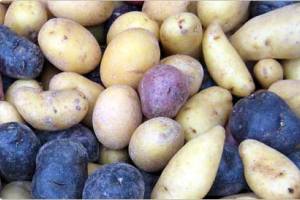
PotatoesNot everyone loves potatoes, but who doesn’t love bread??????   How can anyone resist the aroma of a fresh baking bread……hmmm…yuuummmm………I’m sure not many of you!   I love them  both, with or without butter.  My theory is that everything is good for you, in moderation, plus a little exercise, and you are on the right track.

After I read this article I decided to copy and paste it into my post to share with all of you, my wonderful readers.

Top Diet Myths Exposed

Provided by

RealAge

If you’re so committed to losing weight that you refuse to eat a baked potato for fear of eating empty carbs, you might be missing out on important nutrients and backing your diet into a corner. Open your mind to the truth behind these diet and weight myths and learn how to enjoy some of your favorite foods again.

Myth 1: Potatoes and bread are fattening.

Actually: It’s just the opposite. Starchy vegetables and bread (whole-grain bread, that is) are quality carbs needed to fuel every part of you, from your brain to your muscles. What gets you into trouble is how you eat them: Smear butter on a slice of whole-wheat bread or deep-fry potatoes and you can double, triple, or quadruple the calories.

Myth 2: Drinking a glass of water before a meal curbs appetite.

Actually: Yes and no. Water tames appetite if it’s incorporated into food, such as soup, or a thick drink, like V8 100% Vegetable Juice. Apparently, when water is bound to food, digestion is slower, explains Elizabeth Somer, RD, author of 10 Habits That Mess Up a Woman’s Diet.
That’s why women in one study found chicken-rice soup more satisfying than chicken-rice casserole and a glass of water — even though the soup had 27% fewer calories! One exception to this rule: It’s easy to confuse hunger and thirst, so if you find yourself craving something — but what? — drink a big glass of water and wait a few minutes. You may find that’s what your body really wanted.

Myth 3: Shellfish is high in cholesterol.

Actually: On the one hand, it’s true: Just 3 ounces of shrimp delivers more than a third of your daily cholesterol. But there’s a surprising flip side to this story: Shrimp is low in saturated fat — the kind that becomes artery-clogging bad cholesterol — and has a smidgen of heart-healthy omega-3s. In fact, University of Southern California researchers discovered that eating shellfish, such as shrimp, every week reduced heart attack risk by 59 percent!

Myth 4: The occasional burger and fries won’t kill you.

Actually: It depends on your definition of “occasional.” If occasional means every Friday night and then some, well, you may be pushing it. But if it means every few months, and you’re fit, and you’ve got good numbers (i.e., weight, waist size, cholesterol, blood pressure), AND you’re chowing down on vegetables, whole grains, nuts, and other nutritious fare most other days, hey, you’ll live. But few of us are that perfect. If you do occasionally indulge, offset the effects of a fat fiesta with a brisk 90-minute walk afterward.

Myth 5: Women naturally gain weight after menopause.

Actually: While you can blame a lot of things on hormones (everything from acne to PMS), in this case, slowing down physically is far more likely the cause. Study after study has found that older women who exercise regularly and vigorously can maintain their figures.

Myth 6: Diet soda is worse than the real thing.

Actually: We all would be better off switching to water, diluted fruit juice, and green tea rather than drinking soda — diet or regular. Both types increase kidney and heart disease risk, plus they contain acids that erode tooth enamel, inviting cavities.

Final Fact (this one’s no myth): Maintaining your weight, waist, and body mass index at a desirable level can make your RealAge as much as 6 years younger.

Sorrel Borsch-Shchav – Recipe

Sorrel BorschIf you like tangy flavored soups, you will love Sorrel Borsch (Shchav).   My first experience with tasting this dish was in a Polish restaurant, while visiting my family in Poland.  My husband really liked the slightly tangy taste of this soup, so we have been preparing it during the sorrel growing season.  The main ingredient is sorrel, of course, a simple herb but not easily found in a grocery store, but rather in a specialty food shop, or a garden (your own or your friend’s).

You can find a ready made Shchav, in the Kosher section at your favorite grocery store, but it’s taste does not measure up to the fresh, home made version.  Once you make it at home, you will never want to buy it ready made.

Ingredients:

  • 2 Tbs. unsalted butter
  • 1 celery rib, chopped
  • 1 medium onion, finely chopped
  • 1/4 cup scallions, chopped
  • 1 carrot, chopped
  • 5 cups chicken stock or beef broth or vegetable broth
  • 2 medium potatoes, peeled and diced
  • 1 Tbs. fresh dill, chopped
  • 1 Tbs. fresh parsley, chopped (Italian Parsley preferred)
  • 2 cups sorrel leaves (3 cups if you like it quite tangy), chopped (tightly packed)
  • 1 Tbs. all purpose flour
  • 1/2 cup heavy cream
  • 1Tbs. Maggie Seasoning
  • Salt and black pepper, to taste
  • 2 eggs, hard boiled (sliced, or chopped) for garnish
  • Fresh dill (for garnish)

Directions:

  1. Melt the butter in a large soup pot over medium heat.
  2. Add the celery and onion, carrot, and sauté, stirring, until the onion is softened, about 7 minutes.
  3. Add the scallions and sauté for another 5 minutes.
  4. Add the stock to the soup pot and bring to a boil.
  5. Add the potatoes, then reduce the heat to medium low and simmer, until the potatoes are tender (about 15-20 minutes).
  6. Whisk the flour with the heavy cream, until smooth (not lumpy).
  7. Add this mixture to the soup and bring to boil.
  8. Add the chopped sorrel and cook until wilted, 3 minutes.
  9. Add dill and chopped parsley, Maggie Seasoning, salt and pepper to taste.
  10. Serve in soup bowls, and garnish with chopped, sliced, or wedged, eggs, and a pinch of chopped dill.

Serves 4

Tip: For a lighter version, you may use Half & Half cream, or milk, in place of the heavy cream.  And replace butter with Canola Oil, and omit the egg for garnish.  I like my borsch served with a chopped, hard boiled egg,  because it really complements the overall taste, and enriches its texture.

Sorrel Leaves – My Organic Garden

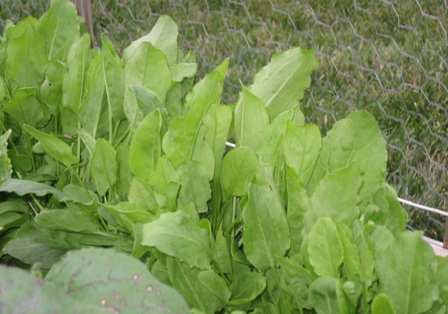
Sorrel leavesIf you read my previous post about my organic gardening, you know that this year I was finally able to locate sorrel seeds, and added this herb to my garden.  Sorrel in a hardy perennial plant, so I have a very good start to have my own supply for a while.  Also if I let it bloom, it will produce seeds for future planting.

Fresh sorrel could be a little challenging to find in a local grocery store, so the best place to look for it is in a specialty food stores, or to grow your own.  I had a difficult time to even find seeds, until I inquired about it in our local gardening/farming store.  They did not have it in stock, but were familiar with this herb, so I was very pleased to be able to order it.

Let me introduce you to this vegetable/herb, if you never had a chance to experience its taste or appearance.

Sorrel is a green leaf vegetable/herb native to Europe.  In appearance sorrel greatly resembles spinach (but has lighter green color, and longer leaves), but in taste sorrel can range from comparable to the kiwifruit in young leaves, to a more acidic tasting older leaf, due to the presence of oxalic acid.

Young sorrel leaves may be used in salads, soups or stews.  One should use the small tender leaves for salads, since they have the fruitier and less acidic taste, but for soups or stews the older leaves are more suitable, because they add more tang and flavor to the dish.

Sorrel has high levels of vitamin A and C, and moderate levels of potassium, calcium, and magnesium.  From a nutritional standpoint, sorrel can be an excellent food for many, but a problem for others, since the oxalic acid may aggravate the conditions of people with rheumatism, and kidney or bladder stones.

If you love sorrel when you first try it, learn to love it in small doses in the beginning, because sorrel has natural laxative properties, and might be a trial for the tummy.

Sorrel is easy to cultivate in any type of soil, however there might a slight problem is protecting it from rabbits and deer, because they will make sure the supply diminishes quicker than it is able to replenish.  Also, if you want to keep it organic, as I do, you have to watch out for other pesky insects, like moths, or slugs.

Sorrel is used in Easter European cooking (Ukrainian, Polish, Russian, Romanian), and the French also are using it in soups, salads, and for making a green sauce to serve with fish.

I like to snack on a few fresh, tender sorrel leaves, on a hot summer day, but I mostly use the fresh leaves to make a Sorrel Shchav (type of borsch/soup).

My future post will include the Sorrel Borsch-Shchav recipe, and a picture of the finished product.

Pecan Chocolate Cake – Atkins Diet

Atkins Diet - Pecan chocolate cakeIs there anyone out there who did not try some sort of a diet program during their lifetime? I guess most of us tried “a diet” to either lose weight, to shape up for health reasons, or to fit into that favorite dress, or to impress a special person in our life.  Some diets are simpler to follow than others, and some sound better than others, so everyone needs to find one that works the best for them.  Of course, it is always wise to first consult with your health care provider, before making that final decision.

Dieting is not an easy task to keep up with, but worse yet, what do you do about celebrating a Birthday, and you need a special cake for the occasion.   How about a cake for someone on Atkins Diet (high fat and extremely low carbs), which means no sugar and no flour……a couple of main ingredients you always use in making cakes!

Google.com to the rescue!!  I found a real nice recipe for a Sugar Free Pecan Chocolate Cake, but I was quite skeptical about the outcome of this project….cake without flour or real sugar…only sugar substitutes….??? Would it taste like chocolate flavored cardboard???  Would it be very dense?   Would it be very flat???

To make a long story short, the cake turned out great, but since I am not a big advocate  of sugar substitutes, I missed the real sugar taste in the frosting.  However, as the old saying goes “If you can’t have the original, you have to settle for a copy”.

Atkins Diet - slice of Pecan Chocolate cake

Here is a picture of my cake, and a recipe, in case you find yourself in a similar situation:

Ingredients:

  • 2 cups pecans (finely ground)
  • 1/3 cup unsweetened cocoa powder
  • 1 1/2 tsp baking powder
  • 1/4 teaspoon salt
  • 4 eggs
  • 1/2 cup (I stick) butter, melted
  • 1 tsp vanilla
  • 1 cup of Splenda
  • 1/2 cup water

Directions:

  1. Heat oven to 350 F.
  2. Grease two 8 or 9″ round pans.
  3. Process pecans in food processor – pulse until they are meal – but they won’t get quite as small as corn meal (I used a nut grinder).
  4. Add the rest of the dry ingredients and pulse again.
  5. Add the wet ingredients and process until well-blended.
  6. Pour into pans and bake for 15 minutes, or until toothpick inserted in center comes out clean.
  7. Remove from the oven and cool before frosting.

Frosting:

  • 8 oz cream cheese
  • 1 cup Splenda
  • 1 tsp. vanilla extract
  • 1 tbs. unsweetened cocoa powder
  • 2 tbs. butter (softened)

Mix all ingredients well, to a spreading consistency, and frost the cake.

How To Waste Money – Helpful Tips

The economy is always part of the news, during good times, or bad times, and financial planning is a tool for managing our money and planning our financial future.

We all have our own ways of saving money, but we all are equally guilty of wasting money, due to poor planning, or worse yet, lack of it.

I came across this very interesting article about several ways of wasting money, and decided to post it in full, rather than providing a link, since after a while these links are discontinued and the “late bloomers” would miss this very useful information.

If you feel you do not fit in this category of spenders, please pass the link to this post to your family and friends, for a real eye opener, and you might get a big THANK YOU!!!!

20 Ways to Waste Your Money
by Erin Burt
Thursday, July 23, 2009provided byKiplinger’sPersonalFinance

Whether a newbie or seasoned budgeter, nearly everyone has spending holes — leaks in your budget that drain money with you hardly noticing.

These small drips can add up to big bucks. Once you find the holes and plug them, you’ll keep more money in your pocket. That spare cash could be the ticket to finally being able to save, invest, or break your cycle of living paycheck to paycheck.

Here are 20 common ways people waste money. See if any of these sound familiar, and then look for ways to plug your own leaks.

1. Buy new instead of used. Talk about a spending leak — or, rather, a gush. Cars lose most of their value in the first few years, meaning thousands of dollars down the drain. However, recent used models — those that are less than five years old — can be a real value because you get a car that’s still in fine working order for a fraction of the new-car price. And you’ll pay less in collision insurance and taxes, too.

Cars aren’t the only things worth buying used. Consider the savings on pre-owned books, toys, exercise equipment and furniture. (Of course, there are some things you’re better off buying new, including mattresses, laptops, linens, shoes and safety equipment, such as car seats and bike helmets.)

2. Carry a credit-card balance. If you have a $1,000 balance on a card charging 18%, you blow $180 every year on interest. That’s money you could certainly put to better use elsewhere. Get in the habit of paying off your balance in full each month.

3. Buy on impulse. When you buy before you think, you don’t give yourself time to shop around for the best price. Resist the urge to make an impulse purchase by giving yourself a cool-off period. Go home and sleep on the decision. If you still want to make the purchase a day or so later, do your comparison shopping, check your budget and go for it. Oftentimes, though, I bet you’ll decide you don’t need the item after all.

4. Pay to use an ATM. A buck or two here and there may not seem like a big deal. But if you’re frequenting ATMs outside your bank’s network, the surcharges can add up quickly. Put that money back in your pocket by using ATMs in a surcharge-free network such as Allpoint or Money Pass.

5. Dine out frequently. A habit of spending $10, $20, $30 per person for dinner can be a huge drain on your wallet. Throw in a $6 sandwich for lunch and a $4 latte in the morning, and you’ve got quite a leak. Learn to cook, pack your lunch and brew your coffee at home and you could save a couple hundred bucks each month.

6. Let your money wallow. If you are stashing your savings in your checking account or a traditional bank account, you are wasting money. You could put it in a high-interest online savings account and get paid to save. You can even get an interest-bearing checking account through such reputable companies as Everbank, Charles Schwab, E*Trade and ING Direct.

7. Pay an upfront fee for a mutual fund. Selecting no-load funds can save you more than 5% in sales charges. Of course, no matter how well a fund has done in the past, you can’t be sure how it will perform in the future. But if you pay a load, you’ll begin the performance derby in the hole to the tune of the load. See the Kiplinger 25 for our favorite no-load funds.

8. Pay too much in taxes on investments. Are you investing in a tax-sheltered 401(k) or Roth IRA? If you’re not maxing out those accounts before you invest in a taxable account, you’re spending too much.

9. Buy brand-name instead of generic. From groceries to clothing to prescription drugs, you could save money by choosing the off-brand over the fancy label. And in many cases, you won’t sacrifice much in quality. Clever advertising and fancy packaging don’t make brand-name products better than lesser-known brands (see Similar Products, Different Prices).

10. Waste electricity. Of the total energy used to run home electronics, 40% is consumed when the appliances are turned off. Appliances with a clock or that operate by remote are typical culprits. The obvious way to pull the plug on your energy vampires is to do just that — pull the plug. Or buy a device to do it for you, such as a Smart Power Strip ($31 to $44 at www.smarthomeusa.com, which will stop drawing electricity when the gadgets are turned off and pay for itself within a few months.

11. Pay banking fees. Overdraw your checking account and you’ll pay $20 to $30 a pop, so it pays to keep tabs on your balance. Plus, are you still paying for a checking account? Free deals abound — but make sure they’re really free. For instance, will the bank charge a fee if your balance drops below a certain level or if you download your info into a personal-finance software program? That’s not free.

12. Buy things you don’t use. This sounds like a no-brainer to avoid, but how many times have you seen something on sale and thought you couldn’t pass it up? Even if something is 50% off, you’re spending too much if you don’t use it. href=Couponing, for instance, can be a great way to save on your grocery bills. But if you buy things you wouldn’t have purchased in the first place simply for the sake of using the coupon, you’re wasting your money. The same goes for buying in bulk. A bargain is no bargain if it sits unused on your shelf or gets thrown away.

13. Own an extra car. Okay, so a car is a necessity for most people. But face it — cars are a huge drain, from their loan payments to insurance fees to gas and maintenance costs. Own more than one car and you’ll double or triple those expenses. Ask yourself if that second or third car is really necessary. Are you holding on to an old car for sentimental reasons? Can you or your spouse carpool, take public transportation or bike to work?

14. Ignore your local dollar store. Shopping at the dollar store can be hit-and-miss, but it’s not all kitsch or junk. If you know what to buy, you can find some real bargains. For instance, my local dollar store charges 50 cents for greeting cards versus the $3-plus at a drug store or gift shop. (I have a big extended family so I figure this saves me more than $100 per year.) You can also score a deal on cleaning supplies, small kitchen tools, shampoos and soaps, holiday decorations, gift wrap and balloon bouquets.

15. Keep unhealthy habits. Smoking is not only bad for your health, it burns up your cash. A pack-a-day habit at $6 a pack costs $180 a month and $2,190 a year. A junk-food or tanning-bed habit can be costly as well. Not to mention the money you’ll waste on medical bills down the road.

16. Be complacent about insurance. Your bill arrives and you pay it without a second thought. When was the last time you shopped around to determine whether you’re getting the best deal? Rates vary widely from insurer to insurer and year to year. Reshopping your auto, home or renters insurance might save you hundreds of dollars.

It also pays to evaluate your insurance needs. For instance, upping your out-of-pocket deductible from $250 to $1,000 can save you 15% or more on your car insurance. Consider using the same insurer for your home and auto insurance — you could snag up to 15% off for a multiple-line policy. And make sure you’re not paying for insurance you don’t need. For instance, you need life insurance only if someone is financially dependent upon you (such as a child).

17. Give Uncle Sam an interest-free loan. If you get a tax refund each April, you let the government take too much money in taxes from your paycheck all year long. Get that money back in your pocket — and put it to work for you — by adjusting your tax withholding. With a little discipline, you can use that extra cash each month to get started saving or pay down debt (or make ends meet to avoid going into debt in the first place). You can file a new Form W-4 with your employer at any time.

18. Pay for something you can get for free. Dust off your library card and check out books, music and movies for free (or dirt-cheap). Don’t pay to receive your credit report when you’re allowed to get it at no charge by law. Take advantage of kids-eat-free promotions. And dial 1-800-FREE-411 for free directory assistance.

19. Don’t use a flexible-spending account. Your employer may allow you to set aside pretax dollars to pay for medical costs not covered by insurance. You can use the money for expenses such as therapy, contact lenses, insurance co-payments and over-the-counter drugs. You may be able to do the same for child-care costs.

20. Pay for unnecessary services. How many cable channels can a person watch? Do you really need all those extra features for your cell phone? Are you getting your money’s worth out of that gym membership? Are you taking full advantage of your subscriptions (such as Netflix, TiVo or magazines)? Take a look at what you’re paying for and what your family is actually using. Trim accordingly.
Copyrighted, Kiplinger Washington Editors, Inc.

Cucumber salad

CucumbersI have just picked some fresh cucumbers from my garden…..they are so fresh, and so much tastier  than the ones from the store (no wax on these babies….).   Garden fresh cucumbers  actually do have a very nice taste, and can be eaten with the peel on, but I prefer them peeled.

Cucumbers may be used in a variety of ways: in tossed salads, as cucumber tea sandwiches, sliced and served plain or with a dip, used in numerous appetizers,  etc.  I love my cucumbers in a cucumber salad,  dressed with sour cream, or vinaigrette style.

Cucumber salad with Sour Cream

Cucumber Vinaigrette Salad

Ingredients:

  • 2 cucumbers (preferred seedless)
  • 1 tsp. salt
  • 2 Tbs. onion, chopped
  • 1 Tbs. dill, chopped
  • 1Tbs. white vinegar
  • 1/3 cup sour cream
  • Salt and pepper, to taste

Directions:

  1. Peel the cucumbers, and slice thinly (you can also use a food processor, or grater).
  2. Add 1 tsp. salt, mix, and place in a colander for 15 minutes to drain.
  3. Place the drained cucumber slices in a bowl.
  4. Mix in chopped onions, dill, and vinegar.
  5. Add salt and pepper to taste.
  6. Fold in sour cream.
  7. Serve.

Tip: Cucumber salad is best served as soon as the sour cream is mixed in, otherwise it will begin to get watery.  I use Light Sour Cream, or Oikos Greek Organic Yogurt, for lower calorie count, or Italian Dressing, for the vinaigrette style.

You Are Unique – Words of Wisdom


Always remember you’re unique.

Just like everyone else.